
Check out the December 2025 newsletter!
The INQ team would also like to wish you a joyful holiday season.
Take time to rest, have fun, and come back refreshed in 2026 for exciting new projects!
News
Since its launch in 2017, nearly 15,000 people have taken the MOOC “Northern Quebec: Issues, Spaces, and Cultures,” a free online course that explores the realities of northern Quebec. Good news: it's coming back in February 2026! (French version)
On January 30, 2026, Institut nordique du Québec invites you to participate in an online training and awareness workshop entitled Myths and Prejudices Against Indigenous Peoples. Reserve your spot now! Space is limited to 50 participants in order to maintain an environment conducive to discussion. This activity will be conducted in French.
Check out the INQ newsletter for the latest news. This newsletter was published on November 28, 2025. Consider subscribing if you would like to receive it directly in your inbox.
Two researchers affiliated with INQ, Michelle Garneau (UdeM) and Mélanie Lemire (ULaval), are among this year's Acfas award winners. Professor Marianne Falardeau (TÉLUQ) is one of five scientists to watch in 2025 worldwide, according to Science News Magazine. The INQ extends its sincere congratulations to these three inspiring individuals.
Between November 9 and 13 , the ‘Introduction to Research and Northern Issues’ (Initiation à la recherche et aux enjeux nordiques, IREN) training course was held at the traditional Innu site of Kanapeut, near Pessamit. Held every two years, this in-depth training course for graduate students took place on Indigenous territory for the very first time. Over three days, some twenty students learned about best practices in northern research.
The recording of Louis-Jacques Dorais' presentation (anthropologist and linguist) is now available. The original broadcast (in French) took place on November 7, 2025 at UQTR. Enjoy listening!
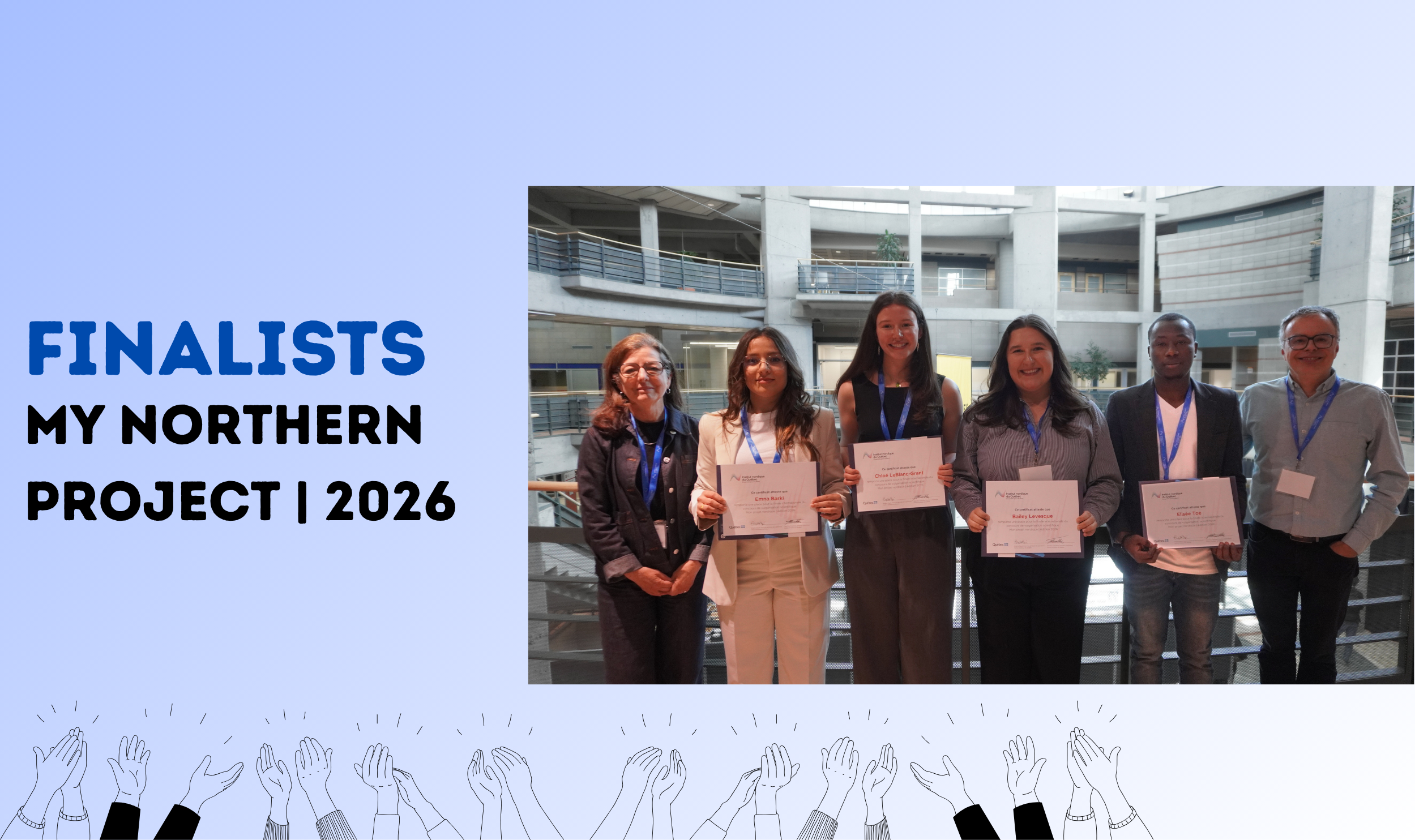
From 16 to 18 October 2025, Institut nordique du Québec (INQ) and its partners took part in the Arctic Circle Assembly (ACA) in Reykjavík, the largest international forum dedicated to the future of the Arctic regions. As it does every year, the INQ offered the finalists of the Mon projet nordique science communication competition an exceptional experience by including them in the Quebec delegation.
Institut nordique du Québec (INQ) will once again be participating in one of the largest international gatherings dedicated to northern and Arctic regions: the Arctic Circle Assembly, to be held in Reykjavik, Iceland. 1. International final of the My Northern Project competition - 2. A session on Indigenous economic governance.
Professor Faiz Ahmad Khan, pulmonologist in Nunavik and Chairholder of the INQ–McGill Northern Research Chair on Optimizing Respiratory Health Services, recently published two significant opinion pieces in major Québec media outlets addressing the ongoing rise of tuberculosis cases in Nunavik.
Working in the North, and particularly in Nunavik, means engaging with a unique environment shaped by specific social, cultural, and historical realities. Whether you work in health care, public safety, education, or other services—or are called upon to lead projects—it is essential to understand this context in order to collaborate effectively and build trust with Inuit communities. The online training program Histoire, culture et réalités contemporaines inuit, (12–15 hours) provides clear reference points to support daily practice:
When the Inuit go fishing for Arctic char on the frozen lake, they know when and where to cast their lines to get a bite, because for centuries, they have passed down fishing sites from generation to generation. But climate change could throw a wrench in their plans by altering the physical environment of the lakes and, therefore, the char's habitat...