

Published on July 21 2026 In INQ Community Research
A Canadian research consortium launches a major international expedition to the Arctic aboard the CCGS Amundsen
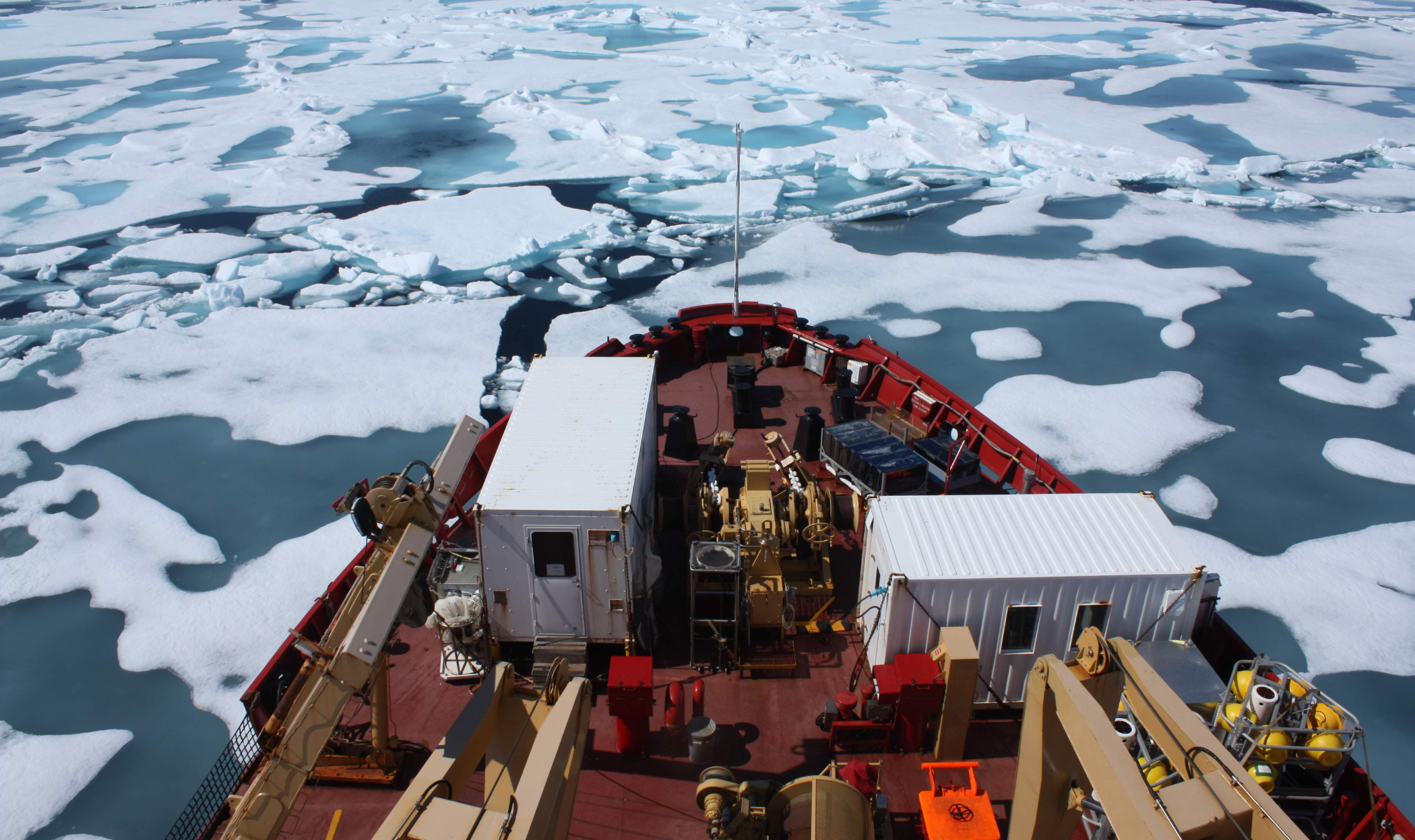
A major international scientific expedition set sail this past July 10 aboard the Canadian research icebreaker CCGS Amundsen. Coordinated by Amundsen Science in partnership with the Canadian Coast Guard, this large scale 139 day mission will continue until November 25 across several regions of the Canadian Arctic and Greenland.
The expedition brings together more than 200 people including scientists, students, northern partners, artists, and journalists from nearly 50 organizations. Structured into five 28 day legs, it supports seven research programs focused on marine ecosystem evolution, glacier dynamics, sea ice, and the integration of Inuit Qaujimajatuqangit.
Leg 1: Imappivut and Benthic Refuges
July 10 (Quebec City) to August 6 (Iqaluit)
The first leg of the 2026 Amundsen expedition will carry out scientific operations for Amundsen's recurring programs: Imappivut and Benthic Refuges. These programs bring together scientists and research professionals from the Nunatsiavut Government, the Nunatsiavut Research Centre, and Fisheries and Oceans Canada (DFO). The Imappivut program aims to understand the distribution of vulnerable marine ecosystems in the coastal and marine waters of Nunatsiavut, the Labrador Sea, and adjacent regions. This year, the scientific teams will also explore the continental shelf and the marine ecosystems of Nachvak and Ramah fjords, located in Torngat Mountains National Park.
DFO's Benthic Refuges program focuses on monitoring sensitive benthic zones within eastern Arctic marine refuges, such as Hatton Basin, Davis Strait, and the Disko Fan Conservation Areas. Planned scientific operations will focus on marine ecosystem distribution, environmental conditions, and ongoing changes in these regions. The scientific teams will perform dives with a remotely operated vehicle to observe habitats and study marine ecosystems in depth. Certain dives may be broadcast live on Amundsen Science's social media channels. The onboard teams will disembark from the vessel after 13 days of scientific operations on July 10 in Goose Bay.
Leg 2: CASCADES
August 6 (Iqaluit) to September 3 (Pituffik Space Base)
During the second leg of the expedition, the first phase of the international CASCADES program will bring the Amundsen into the Arctic waters between Canada and Greenland. This multidisciplinary research program brings together scientists from the Institut nordique du Québec, the Swiss Polar Institute, the French Polar Institute Paul Emile Victor, and the Canadian Climate Action-Transformer program.
This first phase aims to study various fjord glacier systems in Greenland as well as the marine and coastal ecosystems of Nares Strait. The teams will also conduct innovative work on poorly studied whale populations living in certain Greenlandic fjords. In particular, samples will be collected from whale spouts to analyze their DNA and better understand their genetic diversity. Other projects will allow for the continuous collection of greenhouse gases present in the water and atmosphere. Ultimately, the scientific teams will attempt to better understand the interactions between the ocean, glaciers, marine mammal populations, and ecosystems in Nares Strait and Greenlandic waters.
Leg 3: Exploration of the Queen Elizabeth Islands, RetroSEEP, and MAZE
September 3 (Pituffik Space Base) to October 1 (Resolute Bay)
The third leg will take place in the Canadian High Arctic and will bring together the Queen Elizabeth Islands exploration program as well as the MAZE and RetroSEEP programs. A stop in Grise Fiord will take place in the first few days of Leg 3 as a science day is planned. This day will allow the scientific teams to interact with the local community and present the objectives and research activities that will be conducted during the expedition.
For the second consecutive year, the Queen Elizabeth Islands program will aim to deepen knowledge on atmosphere-water-ice systems and the movements of water masses in these Arctic regions. Several ice operations are planned on various ice islands and glaciers around the Queen Elizabeth Islands and the Tuvaijuittuq Marine Protected Area. The MAZE program focuses in particular on fjord and glacial zone operations, as well as operations in sea ice conditions, to study the physical dynamics specific to these environments.
The European team of the RetroSEEP program will join the scientific crew of the CCGS Amundsen for the first time. Their team will conduct an ambitious field program focused on the study of glacial environments and lakes. Several sediment cores as well as water sampling, both in marine environments and on land, are planned. This work will significantly complement the research previously conducted in these regions by Amundsen scientists, notably by providing new data on glaciers that had never been mapped before.
Leg 4: KEBABB and Mooring Program in the Davis Strait Gateway
October 1 (Resolute Bay) to October 29 (Iqaluit)
The fourth leg will host the Department of Fisheries and Oceans KEBABB program as well as an international mooring program in the Davis Strait.
The KEBABB program (Knowledge and Ecosystem-Based Approach in Baffin Bay) brings together scientists, professionals, and students to characterize the variability and trends of physical, chemical, and biological oceanographic conditions in Baffin Bay. This year marks the seventh year of the KEBABB program aboard the Amundsen, continuing the same sampling lines and long term monitoring operations. The annual collection of this data allows them, among other things, to better understand the habitats of marine populations living in these waters and their migration patterns.
In parallel, the Davis Strait mooring program focuses on observing and understanding long term changes in this strategic region. In total, 13 mooring lines will be recovered and 13 other lines will be deployed along this transect.
This leg will also host several artists in residence onboard, who will work in collaboration with the scientific teams to explore new ways of storytelling, interpreting, and sharing research conducted in the Arctic with various audiences.
After 28 days of navigation and sampling around the Queen Elizabeth Islands, the scientists and crew of the CCGS Amundsen will disembark on October 2 in Resolute Bay. A science day will be organized on October 2 in Resolute Bay to kick off this leg with exchanges and discussions with community members.
Leg 5: CASCADES
October 29 (Iqaluit) to November 25 (Quebec City)
The fifth and final leg of the expedition corresponds to the second phase of the CASCADES program, which focuses on sea ice formation in western Baffin Bay in the fall.
The scientific teams will set up four research stations, the locations of which will depend on ice conditions. These stations will study sea ice formation processes and ocean-atmosphere interactions during this key period of the year. Land based deployments may also be carried out opportunistically. In addition, some scientists will study phytoplankton as well as bacteria present in the water and ice during this seasonal transition period.
This leg will complement the observations made during the summer, offering an essential seasonal perspective to better understand the climate and ocean dynamics of the Arctic.
To learn more about the course of the expedition, consult the documentation provided by Amundsen Science:
➤ Press Release (by Amundsen Science)
➤ Detailed Fact Sheet (by Amundsen Science)
Back to news