

Published on In Webinar
Webinar | Autonomous Robotic Systems for Large-Scale Environmental Monitoring
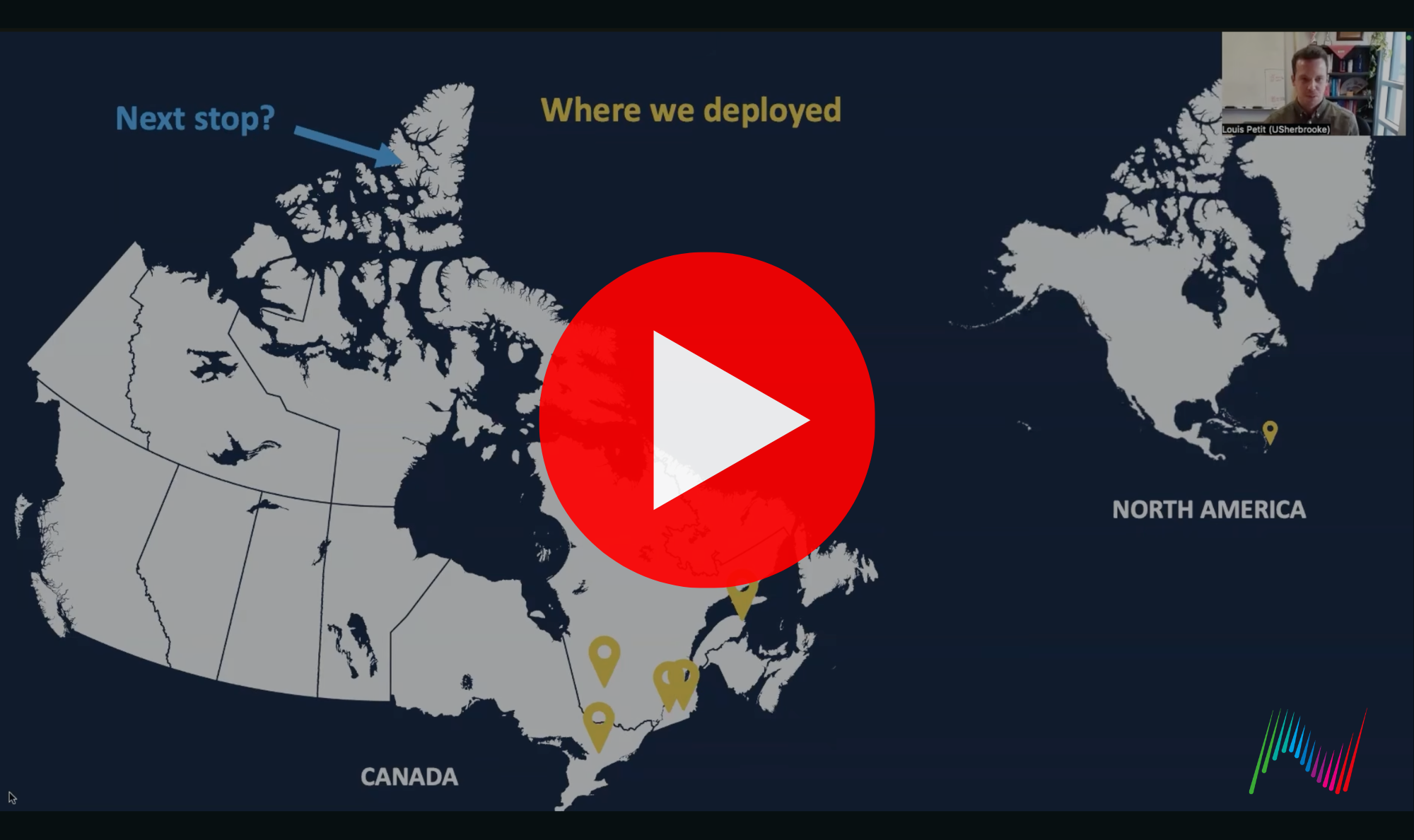
Presented by Louis Petit, Professor in the Department of Electrical and Computer Engineering, Université de Sherbrooke
Abstract
As autonomous mobile robots transition from controlled laboratory settings into the "real world," they face fundamental challenges posed by hostile, unstructured, and resource-constrained environments. This presentation explores the algorithmic foundations required to bridge the gap between fragile autonomy and real-world complexity for aerial, terrestrial, and aquatic robots. I will present recent work from the SAFiR Lab focused on developing scalable, predictive, and adaptive robotic intelligence designed to address global challenges such as biodiversity loss, infrastructure degradation, and natural disasters. Key topics covered include: sparse topological mapping, visual traversability learning, adaptive informative sampling, autonomous exploration, and risk-aware path planning.
The webinar recording is now available on INQ's YouTube channel. (In French)

Original broadcast: November 3, 2026, as part of the webinar series organized by Institut nordique du Québec.
Back to news