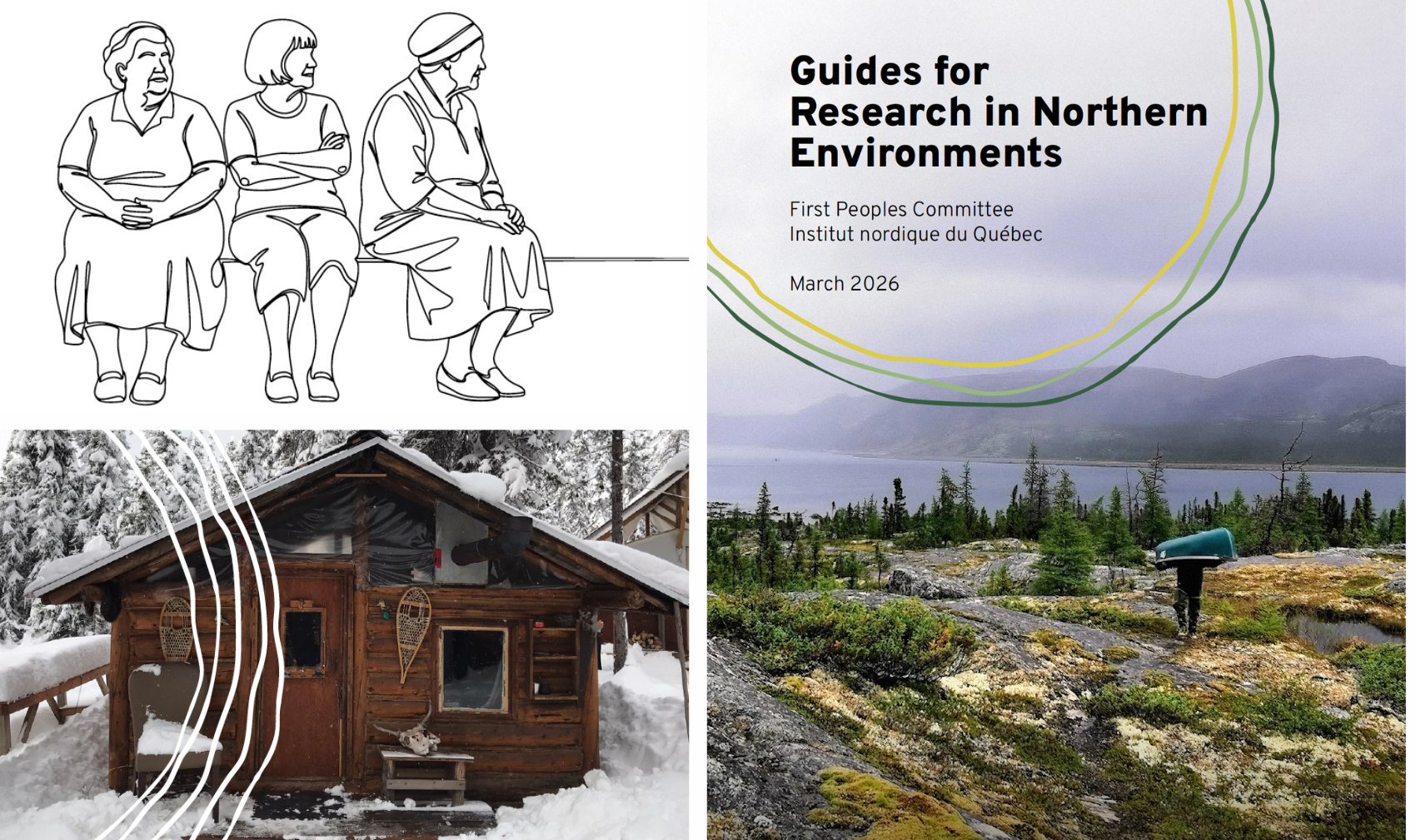

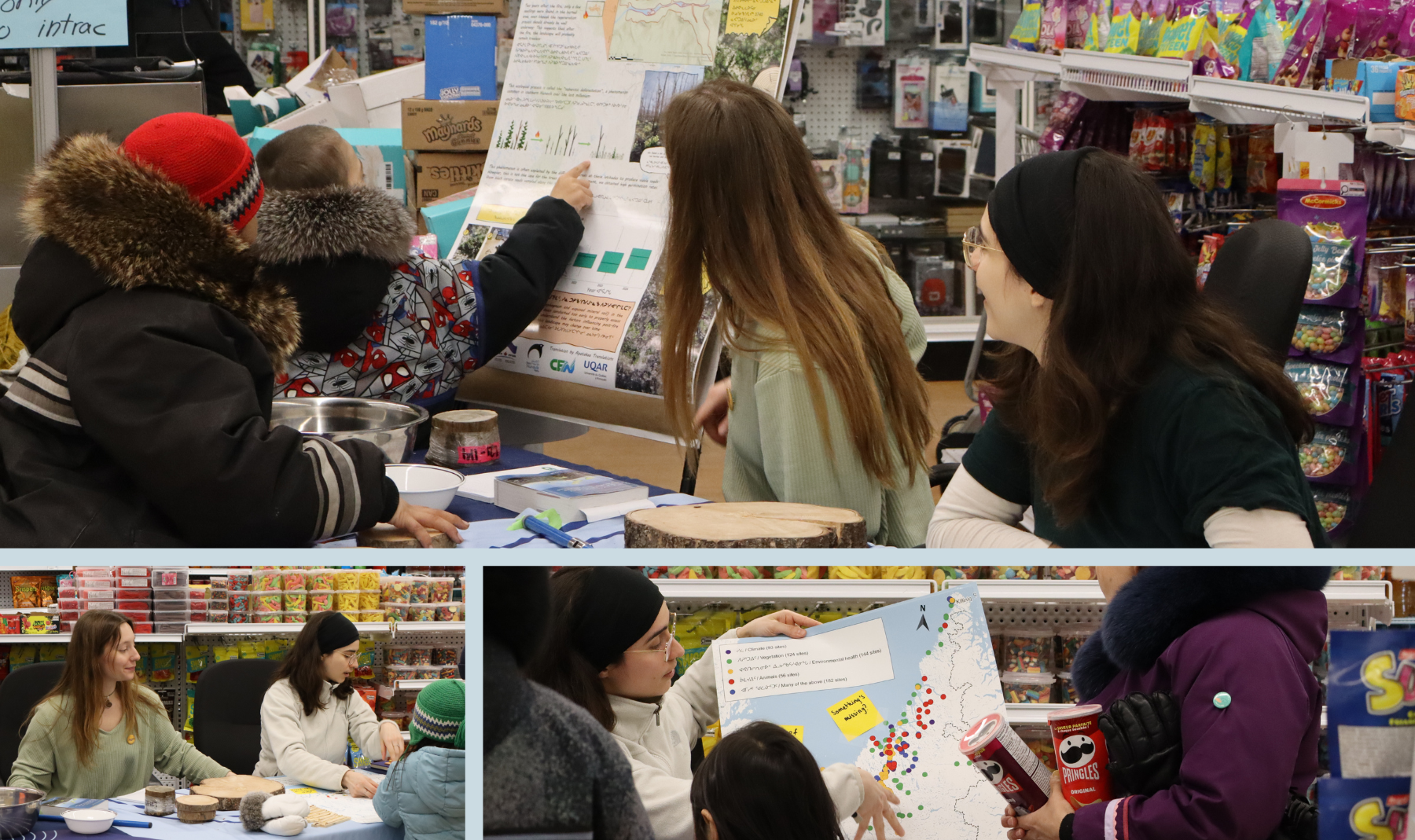
The virtual exhibition Inuit Worlds, from past to present highlights the richness of Canada’s Inuit culture, both past and present. This new trilingual educational tool, available in French, English, and Inuktitut, is intended for young Inuit, scientists working in the Arctic, and the general public interested in learning about Inuit history, heritage, and culture.
News
During her eight-year tenure at the Greenland Institute of Natural Resources in Nuuk, Professor Caroline Bouchard studied the population dynamics of Arctic cod. As noted in her study published in February 2026 in Arctic Science, the evidence points to one conclusion: the waters off southern Greenland are no longer suitable for the fish, and it is migrating northward.
Two new student positions are open at UQTR. Please consult the detailed descriptions and send your application directly to the project managers as specified in each offer.
Tuberculosis remains a persistent public health challenge in Nunavik. In 2025, the region crossed an alarming threshold, recording a record number of active cases. A study published in the Canadian Medical Association Journal examines this concerning situation.
On March 4, Jean-Éric Tremblay, Scientific Director of Institut nordique du Québec (INQ), played a key role at the 13th annual World Ocean Summit held in Montreal. This world-renowned event, organized by Economist Impact, brings together policy makers, investors, scientists, and Indigenous leaders. The goal is to move from major international agreements to concrete actions to protect and sustainably exploit our oceans.
In Nunavik, the thawing of permafrost is destabilizing buildings, leading to potential structural damage and water infiltration into the building envelope. This raises the question of how to detect water damage in walls before it is too late. Cindy Dumais is a doctoral student in Professor Caroline Duchaine's lab at the Institut Universitaire de Cardiologie et de Pneumologie de Québec at Université Laval, and she has found the answer in fungi.
The SIKU platform supports Indigenous knowledge and data sovereignty. Watch the demonstration led by Candice Sudlovenick from the Arctic Eider Society.
On February 10, 2026, the Institut nordique du Québec (INQ) participated in the Forum on Dual-Use Research, organized by the Fonds de recherche du Québec (FRQ) at the Québec City Convention Centre. This event, opened by Québec’s Chief Scientist Rémi Quirion, aimed to explore how scientific innovation can meet current geostrategic needs while stimulating the development of dual-use technologies (civilian and military).
The Scientific Council of UArctic has appointed Professor Daniel Chartier as the UArctic Chair on Images, Perceptions and Mediations of the Arctic for a term ending December 31, 2029.
Its round shape and central island have earned Lake Manicouagan the nickname 'the Eye of Quebec'. This unique lake is located within a meteorite crater and is the deepest in Quebec, reaching depths below sea level. The lake is also part of the territory of the Innu people, which was lost in 1970 when the Manic-5 dam was commissioned. Léo Chassiot, a professor in the Department of Environmental Sciences at the Université du Québec à Trois-Rivières, has made it his mission to decipher the history of this now-submerged landscape, which is preserved in the lake's sediments.
Applications are now open for the UArctic north2north mobility program, which offers the opportunity to study in different regions of the North.
A north2north exchange allows you to acquire skills in Arctic-related fields and discover another North, which will be useful in your future professional career and academic projects.
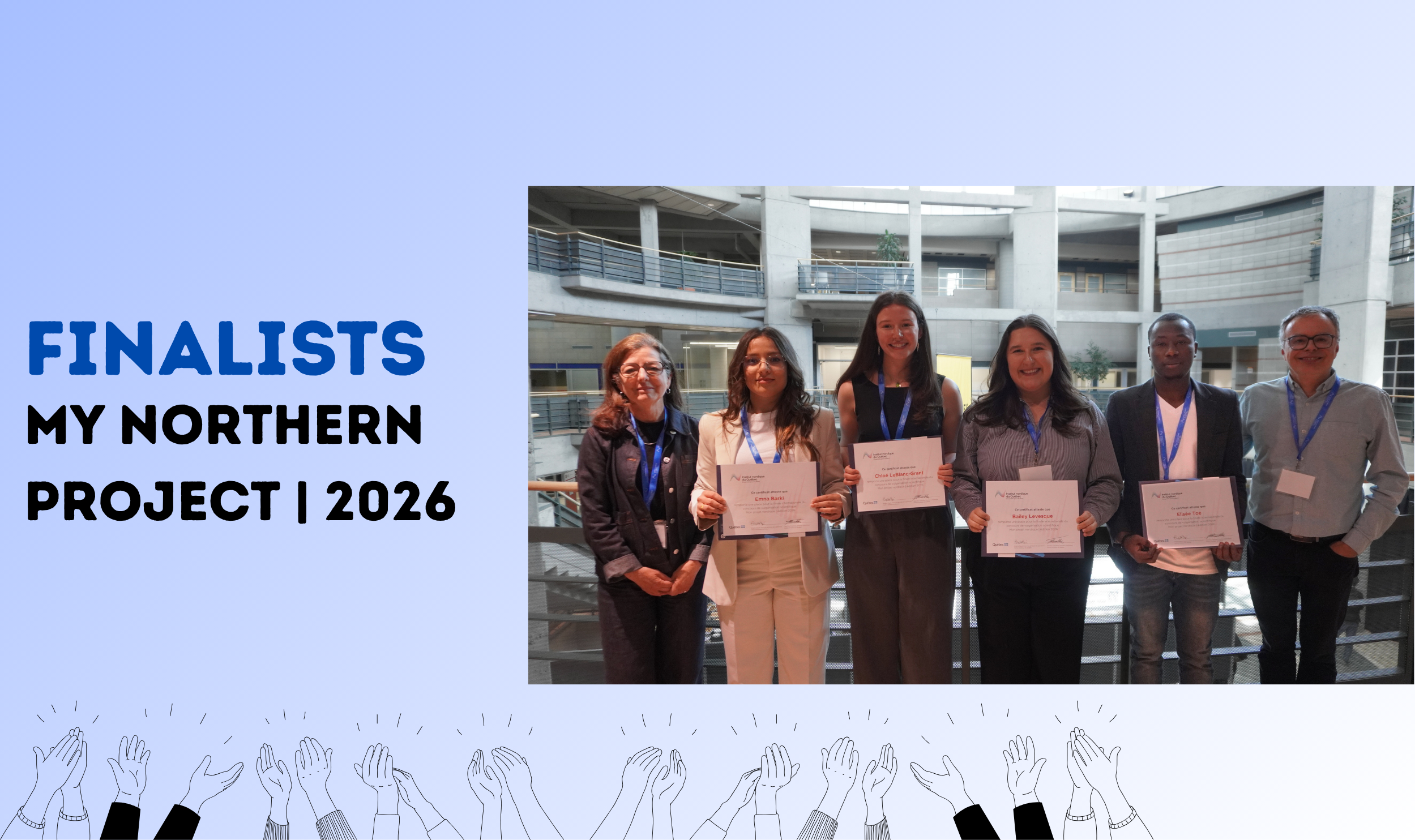
INQ invites master’s and doctoral students working on a northern or Arctic-related topic to submit their application to take part in the provincial final of the science communication competition My Northern Project (MNP).